
 951-249-7500
Did you know that AI-powered search results have already reduced traditional dental ad clicks by up to 25% this year? If you feel like you are paying more for fewer patients, you aren’t alone. Understanding the google ads for dentists cost in 2026 requires looking past simple vanity metrics and focusing on the actual value of a booked appointment. It’s frustrating to watch your budget disappear on clicks that never turn into high-value cases like implants or full-arch restorations.
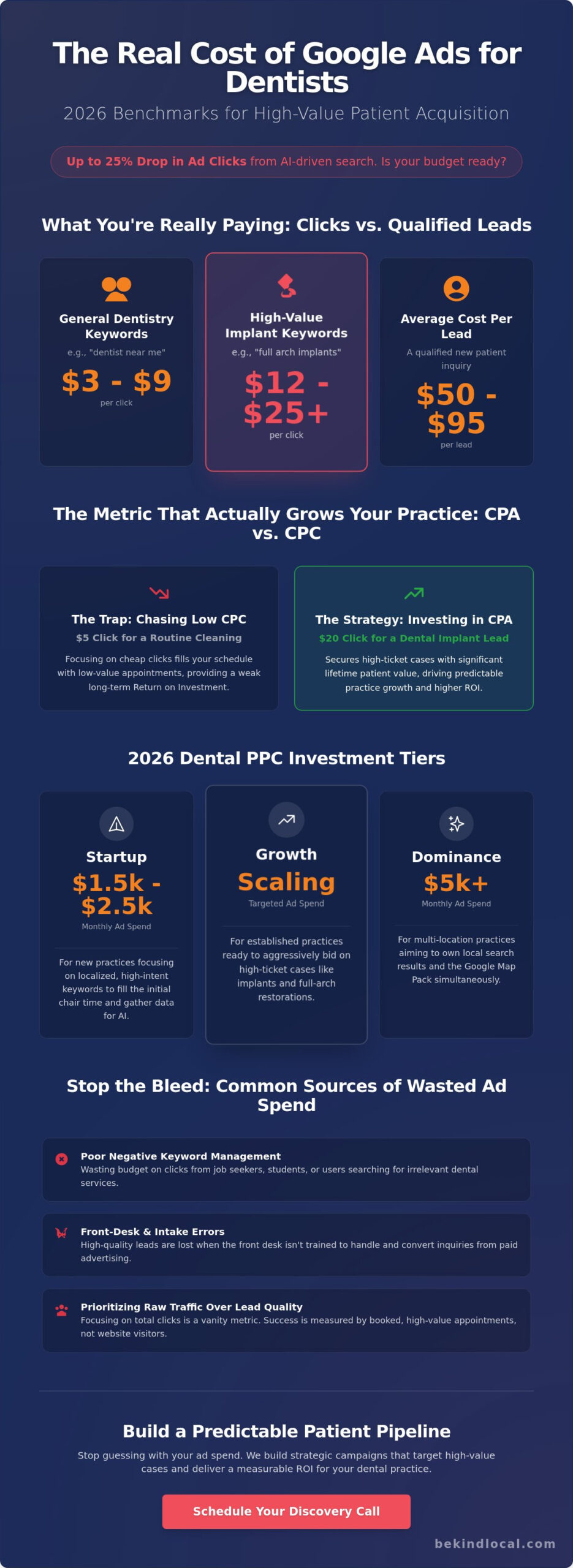
We believe your marketing should be an investment in your local community, not a drain on your practice’s resources. This guide will show you how to manage a landscape where general dental keywords average between $3 and $9, while high-intent implant leads can climb past $25 per click. You’ll discover the current benchmarks for a healthy cost-per-lead and learn a strategic framework to target high-ticket patients without wasting your ad spend. We will break down the crucial differences between Search Ads and Local Service Ads so you can build a predictable patient pipeline that actually grows your practice.
Key Takeaways
- Identify the latest 2026 benchmarks for dental CPC and the essential difference between your direct ad spend and professional management fees.
- Understand how location and specific case types, such as high-ticket implants versus routine cleanings, influence the google ads for dentists cost in your local market.
- Evaluate the performance of Google Search Ads versus Local Service Ads to choose the most effective model for your practice’s growth.
- Pinpoint common sources of wasted ad spend, including poor negative keyword management and front-desk handling errors that prevent leads from booking.
- Learn why prioritizing lead quality through strategic management consistently delivers a higher ROI than chasing raw traffic volume.
Breaking Down the Numbers: What Does Google Ads for Dentists Actually Cost in 2026?
Understanding the google ads for dentists cost begins with a clear distinction between your ad spend and your management fees. Your ad spend is the capital you pay directly to Google to participate in their pay-per-click (PPC) model. Management fees represent the investment in a strategic partner who ensures that money isn’t wasted on low-intent clicks. In 2026, we see general dentistry keywords like “dentist near me” averaging between $3 and $9 per click. However, if you are looking for high-value cases, expect to pay more. Dental implant keywords often range from $12 to $25, and can exceed $50 in highly competitive metropolitan areas.
The average cost per lead (CPL) for dental ads currently sits between $50 and $95. This is a far more vital metric than your total monthly spend. If you spend $2,000 but only get 10 leads, your CPL is $200. If you spend $4,000 and generate 80 leads, your CPL drops to $50, and your practice grows much faster. Tracking these numbers allows you to treat your marketing as a predictable engine for growth rather than a fluctuating expense.
CPC vs. CPA: Which Metric Actually Matters?
Focusing solely on a low Cost-Per-Click (CPC) is a common trap. A $20 CPC for a dental implant lead often yields a better return than a $5 CPC for a routine cleaning because the lifetime value of that patient is significantly higher. You should calculate your target Cost-Per-Acquisition (CPA) by looking at your patient’s long-term value. In 2026, Google’s AI-driven bidding requires a healthy data threshold to function. If your campaign doesn’t generate enough conversions, the algorithm cannot learn who your best patients are, making your google ads for dentists cost less efficient over time.
The 2026 Dental PPC Investment Tiers
Every practice has different goals, and your budget should reflect your specific local market density. We generally categorize investments into three strategic tiers:
- The Startup Tier: Ideal for new practices focusing on localized, high-intent keywords to fill the initial chair time. This usually requires a monthly ad spend of $1,500 to $2,500 to gather enough data for AI optimization.
- The Growth Tier: For practices ready to scale, this tier involves aggressive bidding on high-ticket cases. Much like choosing a polyurea system for its extreme durability in concrete coatings, this tier builds a resilient lead pipeline by targeting implants and full-arch restorations.
- The Dominance Tier: This is for multi-location practices or DSOs aiming to own the local search results and the map pack simultaneously. These budgets often exceed $5,000 and require sophisticated brand strategy to convert high volumes of traffic.
Success at any tier depends on how well you manage your lead quality. Raw traffic volume is a vanity metric; what matters is how many of those clicks turn into patients sitting in your chairs.
Variables That Influence Your Dental PPC Budget: From Location to Case Type
Your practice isn’t a carbon copy of the one three towns over. This is why a fixed budget usually fails. The google ads for dentists cost fluctuates based on your specific zip code and the types of patients you want to attract. If you are in a saturated market like Miami, you’ll naturally pay a premium compared to a practitioner in Indianapolis. It’s about supply and demand on the digital shelf. We see these costs as a reflection of local competition rather than a static industry standard.
Geographic Competition and Bid Inflation
In high-competition zones across Florida and Texas, the cost-per-resident spikes. You aren’t just competing with the dentist down the street; you’re often competing with corporate DSOs that have massive, national budgets. We recommend using tight radius targeting to prevent wasteful spend. It doesn’t make sense to show ads to people who won’t drive past three other offices to reach you. Integrating Local SEO helps build organic authority over time, which eventually reduces your total reliance on expensive paid bids to maintain visibility.
Service-Specific Cost Benchmarks
Different procedures carry different price tags because their lifetime value varies. We categorize these into three main buckets:
- Emergency Dentistry: These keywords usually have high volume and a lower CPL. However, they require immediate response times from your front desk to be profitable.
- Invisalign and Cosmetic: These cases have a high CPC and a longer decision cycle. They require a sophisticated advertising strategy to keep prospects engaged through multiple touchpoints before they book.
- Dental Implants: These represent the highest google ads for dentists cost due to their high-ticket nature. While the CPC is steep, the potential for practice growth is unmatched.
Seasonality also plays a role in your budget. As dental benefits reset toward the end of the year, competition for “use it or lose it” patients intensifies. Additionally, your website’s health directly impacts your wallet. Google assigns a Quality Score based on your page speed and relevance. A fast, helpful site can actually lower your bid costs by proving to Google that you provide a great user experience. While you scale your campaigns, remember to follow AMA ethical guidelines to maintain professional trust and transparency. If you’re unsure how these variables affect your specific market, feel free to reach out for a strategy review.
Google Search Ads vs. Local Service Ads: Which Delivers the Best CPA?
Choosing the right platform often feels like a fork in the road for many practitioners. You have two primary paths: Local Service Ads (LSAs) and traditional Search Ads. LSAs operate on a pay-per-lead model. You only pay when a potential patient actually calls your office or sends a message. This is a stark contrast to the traditional pay-per-click model used in Search Ads, where you pay for every visit to your site. For many new practices, LSAs are the most cost-effective entry point because they provide a layer of protection against empty clicks that don’t result in a conversation. However, understanding how these impact your total google ads for dentists cost requires looking at the quality of those leads, not just the price per call.
The Pros and Cons of LSAs in 2026
The “Google Screened” badge is the crown jewel of the LSA platform. It builds immediate trust by showing that your practice has passed a background check and license verification. In a local community, this badge acts as a digital handshake. While LSAs are great for volume, they are often a “volume play” rather than a precision tool. You can’t easily target a specific high-ticket procedure like a full-arch restoration with LSAs alone; Google decides which dental leads to send your way based on proximity and reviews. To keep your budget healthy, you must actively dispute “junk” leads, such as wrong numbers or people outside your service area, to ensure you aren’t paying for non-opportunities.
Traditional Search Ads: Precision Over Volume
Traditional Search Ads allow for a “surgical strike” on the exact patients you want to treat. If your goal is to fill your schedule with “all-on-4 dental implants,” Search Ads provide the keyword precision to make it happen. Unlike the rigid structure of LSAs, Search Ads allow you to send traffic to high-converting custom website design landing pages. These pages tell your practice’s story and highlight your specific expertise, which is essential for high-ticket cosmetic cases where patients need more than just a phone number to feel comfortable.
Your ad copy must always align with Federal Trade Commission regulations to ensure every claim is truthful and substantiated. Deceptive claims aren’t just unethical; they are a fast way to get your account flagged and inflate your google ads for dentists cost through wasted spend. We find that the most successful practices use a hybrid approach. They use LSAs to capture general volume and emergency calls while running targeted Search Ads to attract the specialized, high-value cases that truly grow a practice’s bottom line.
Stopping the Bleed: Identifying Wasteful Spend in Your Dental Campaigns
Many practitioners view their marketing budget as a leaky bucket. They focus heavily on the total google ads for dentists cost without realizing that a significant portion of their spend might be vanishing into thin air. Identifying this waste is the fastest way to improve your ROI without adding a single dollar to your daily budget. It’s not just about who clicks your ad; it’s about ensuring you don’t pay for the wrong people. In 2026, efficiency is the only way to stay ahead of rising bid costs.
One of the most common drains on a dental budget is the “Call Center” trap. When you generate a lead that costs between $50 and $95, every missed call or poorly handled inquiry is a direct hit to your bottom line. If your front desk isn’t trained to convert a high-intent caller into a booked appointment immediately, your cost per acquisition will skyrocket. We also see practices making the $1,000 mistake of sending paid traffic to a generic homepage. This creates friction. A patient looking for emergency care doesn’t want to hunt through your “About Us” page; they need a clear path to help.
The Negative Keyword Strategy
Negative keywords are the shield for your ad budget. By telling Google exactly which searches you don’t want to show up for, you protect your capital from low-intent traffic. We recommend filtering out terms like “cheap,” “free,” “DIY,” or “jobs.” These searches don’t imply buyer intent and will only drain your resources. You should also exclude generic dental terms that don’t lead to high-value appointments. Precision in your keyword list ensures that your google ads for dentists cost stays focused on patients ready to commit to treatment.
Conversion Rate Optimization (CRO) for Dentists
Your landing page is where the real work happens. A small, 2% increase in your landing page conversion rate can effectively cut your cost per lead in half. High-converting dental pages rely on social proof, such as patient testimonials and clear, visible calls to action. Frictionless design means making it as easy as possible for a mobile user to tap a button and call your office. Building this level of trust is essential for converting high-ticket leads. For more insights on how to build a reliable presence, see our guide on Home Service Brand Strategy.
Finally, we must address click fraud. In 2026, competitor clicks and bot activity can eat up a budget quickly. Using advanced tracking and protection software helps ensure your ads are seen by real people in your local community. If you suspect your current campaigns are bleeding money, we can help you audit your account for wasteful spend and redirect that capital toward high-intent leads.
Maximizing Lead Quality: Why Strategic Management Outperforms Raw Ad Spend
Evaluating your total google ads for dentists cost requires looking past the monthly bill and focusing on the actual quality of the patients entering your practice. A massive, unmanaged budget often acts like a floodlight; it hits everything but illuminates very little. We’ve found that a smaller, surgically targeted budget consistently outperforms raw spend by focusing on intent rather than just impressions. Strategic management ensures your google ads for dentists cost translates into actual revenue by connecting your ad spend to your patient management software and tracking the “lead to patient” pipeline.
A solid brand strategy acts as the foundation for these efforts. It’s the difference between a patient clicking an ad because it’s there and clicking because they feel a genuine connection to your practice’s values. When your branding is clear, it reduces the friction that leads to high bounce rates. We treat our clients as partners in a local community, ensuring that every dollar spent builds long-term trust rather than just a one-time click.
Lead Quality Over Lead Volume
It’s easy to get excited about a high volume of phone calls, but a phone call isn’t a qualified consultation. We prioritize the ethics of lead generation by focusing on patients who actually need your specific services. To achieve this, we often use pre-qualifying questions on landing pages to filter out low-intent users. This might mean fewer total leads, but it results in a much higher booking rate for your front desk. We believe it’s better to generate five high-intent implant leads than fifty callers asking about services your practice doesn’t provide. This approach respects your time and protects your budget from the “junk” leads that inflate your cost per acquisition.
Your 2026 Action Plan for Dental PPC
Success in the coming year requires a proactive approach to your digital growth. If you’re ready to stop the bleed and start growing, follow these three steps:
- Audit your current spend: Look closely at your search terms report and remove any “junk” keywords that don’t imply a desire for treatment.
- Optimize your local presence: Ensure your Google Business Profile is fully updated to support your paid ads with strong social proof and local authority.
- Track your ROI: Integrate your CRM to see exactly which campaigns are putting patients in chairs, aiming for the 200-400% ROI seen in well-optimized campaigns.
We don’t just want to be another vendor; we want to be the strategic growth partner that helps your practice thrive. If you’re ready to build a high-intent strategy that actually converts, schedule a discovery call with Be Kind Local today at bekindlocal.com.
Owning Your Local Market with a High-Intent Patient Strategy
Managing your google ads for dentists cost doesn’t have to feel like a gamble. By shifting your focus from raw traffic volume to high-intent patient leads, you turn your marketing budget into a predictable engine for growth. You’ve seen how identifying wasteful spend on low-intent keywords can safeguard your capital. Optimizing your landing pages for conversion can effectively double your lead flow without increasing your daily spend. These strategic shifts ensure your practice remains visible and profitable in a competitive digital landscape.
We specialize in high-ticket specialty niches, providing ethical and transparent management that puts your practice’s integrity first. Our approach isn’t about opening the floodgates to unqualified callers. It’s about ensuring every lead has the potential to become a long-term patient in your chair. We act as your strategic growth partner, helping you navigate the complexities of dental marketing with confidence and clarity.
Ready to stop wasting your ad spend? Schedule a discovery call with Be Kind Local today.
Let’s build a sustainable pipeline together that respects your budget and honors your commitment to quality care.
Frequently Asked Questions
Is Google Ads worth it for a small dental practice?
Google Ads is absolutely worth it for small practices because it allows you to compete directly with larger offices for local search intent. Unlike organic SEO which takes months to build, paid ads put you at the top of search results immediately. This is especially useful for filling gaps in your schedule or launching a new location where you need patient volume quickly.
How much should a dentist spend on Google Ads per month?
Most dental practices should budget between $1,500 and $5,000 per month for their ad spend. This range allows for enough click volume for Google’s AI to optimize your campaigns effectively. In less competitive towns, you might start lower; however, major cities often require higher budgets to maintain a consistent presence against corporate DSOs.
What is the average cost-per-click for dental keywords in 2026?
In 2026, general keywords like “dentist near me” average between $3 and $9 per click. High-intent keywords for specialized services carry a higher price tag. For example, dental implant clicks typically range from $12 to $25; emergency dental terms often sit between $6 and $15 due to their urgent nature.
How do I lower my cost-per-lead for dental implants?
You can lower your cost-per-lead by implementing a strict negative keyword list and using dedicated landing pages. Avoiding “junk” clicks from people seeking free or low-cost services directly reduces the google ads for dentists cost. High-converting pages that use social proof also ensure that more of the clicks you pay for turn into actual consultations.
Can I run Google Ads myself, or do I need an agency?
While you can manage ads yourself, the complexity of 2026 AI-bidding and tracking often makes an agency a safer investment. A strategic partner handles the technical heavy lifting and prevents the leakage of your budget on non-converting traffic. This allows you to focus on patient care while experts manage your digital growth and lead quality.
How long does it take to see results from a dental PPC campaign?
You will see traffic and phone calls almost as soon as your campaign goes live. However, reaching peak efficiency usually takes 30 to 90 days. This period allows the platform to gather enough data to identify which searchers are most likely to book an appointment, leading to a more stable return on investment over time.
What is the difference between Google Ads and Local Service Ads for dentists?
The main difference is how you pay for the visibility. Traditional Google Ads use a pay-per-click model where you pay for every website visit. Local Service Ads (LSAs) use a pay-per-lead model where you only pay for actual phone calls or messages. LSAs also feature the “Google Screened” badge, which builds immediate trust with local searchers.
How do I know if my dental ads are actually working?
You know your ads are working when you see an increase in booked appointments, not just website traffic. We recommend integrating your ads with your patient management software or CRM to track the full journey. True success is measured by the revenue generated from new patients compared to the total google ads for dentists cost.