
 951-249-7500
Relying solely on word-of-mouth isn’t a business strategy; it’s a gamble that leaves your installation schedule to chance. You’ve spent years perfecting your craft, whether it’s applying durable polyaspartic garage coatings or designing custom walk-in closets, but the frustration of a quiet phone is a weight no owner should carry. If you’re tired of seeing high ad spend result in low-quality inquiries that never convert, it’s time to learn how to build a predictable lead generation system that honors the hard work you put into every project.
We understand that you want more than just “traffic.” You want high-ticket projects from neighbors who value quality and integrity. In this guide, we’ll show you how to transform inconsistent leads into a data-driven engine that runs smoothly without constant intervention. We’ll explore how local SEO and strategic PPC work together to lower your cost-per-lead while positioning your brand as the trusted expert in your community. By the end, you’ll have a clear, actionable roadmap to create a steady flow of qualified prospects for your flooring or closet business.
Key Takeaways
- Shift your business from “hope-based” marketing to a data-backed pipeline that provides a consistent ROI regardless of seasonal shifts in the home improvement market.
- Discover how to build a predictable lead generation system by aligning your local search presence with high-intent buyers looking for specific solutions like polyaspartic garage floors or custom walk-in closets.
- Master the dual-pillar approach of using Local SEO for long-term authority and Google Ads for immediate, high-quality lead flow.
- Learn why lead quality outweighs volume and how to use qualifying questions to filter for high-ticket projects rather than low-price inquiries.
- Gain the framework to track your cost-per-lead and customer acquisition costs, ensuring every marketing dollar supports your highest profit margins.
Defining a Predictable Lead Generation System for 2026
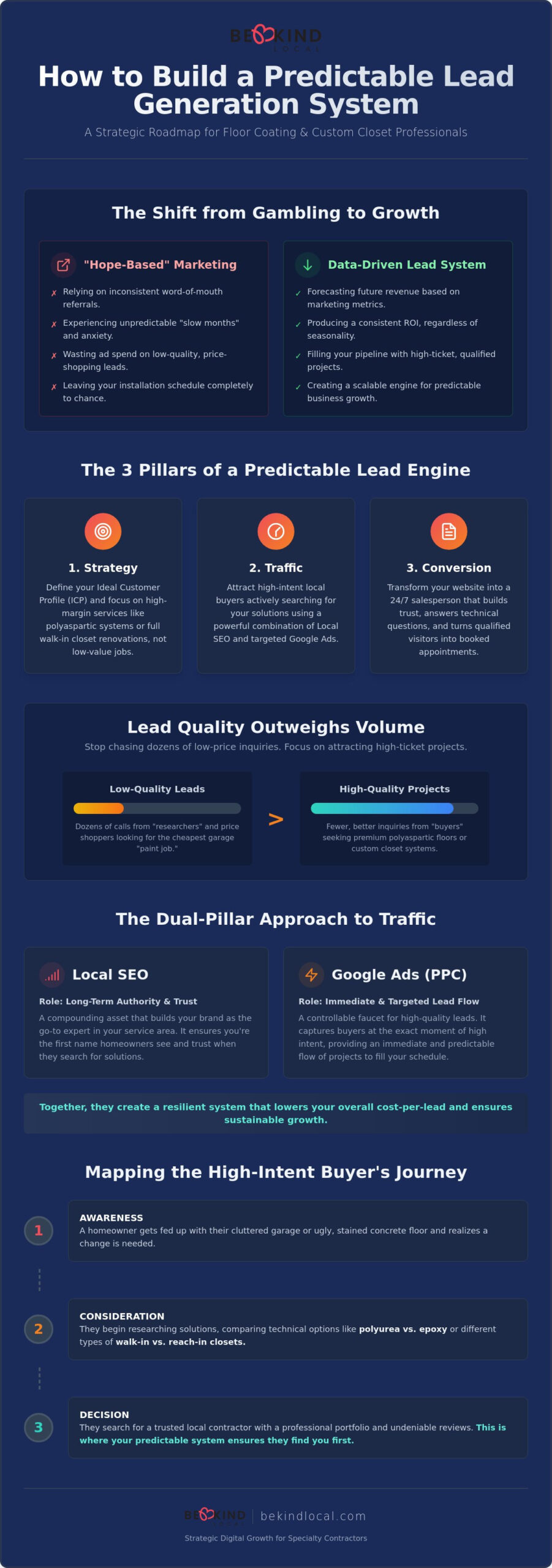
For many specialty contractors, the phone ringing often feels like a lucky break rather than a planned result. If you’re wondering how to build a predictable lead generation system, you first need to understand that predictability is the ability to forecast your future revenue based on your current marketing metrics. It’s the difference between hoping for a busy week and knowing exactly how many high-ticket closet or flooring projects are in your pipeline for next month. A truly predictable system produces a consistent ROI regardless of seasonal home improvement trends, moving your business away from “hope-based marketing” and into a space of data-backed pipeline management.
In the world of specialty contracting, raw lead volume is often a vanity metric. Getting dozens of calls from people looking for the cheapest possible “paint job” for their garage floor won’t help you grow. True predictability comes from understanding what lead generation is for a high-end service provider: the strategic cultivation of high-intent prospects who value quality over a bargain. It’s about quality over quantity, ensuring your team spends time on estimates that actually turn into profitable, long-term contracts.
The Shift from Word-of-Mouth to Digital Systems
Referrals are a beautiful testament to your craftsmanship, but they’re notoriously difficult to scale. Relying solely on your past customers’ social circles limits your growth to their timeline, not yours. Digital visibility changes the game by letting you capture prospects the moment they realize their garage needs a polyurea coating or their pantry has become a source of daily stress. This proactive approach reduces the anxiety of “slow months” that often plague the garage and closet industries. By having a system in place, you aren’t just waiting for the phone to ring; you’re actively inviting new neighbors into your community of satisfied clients.
Core Components: Strategy, Traffic, and Conversion
Building this engine requires three core components working in harmony. First is strategy. This means identifying which high-ticket services, like reach-in closets or polyaspartic systems, offer the best margins for your specific team. Second is traffic. We use local SEO to ensure you’re the first name a homeowner sees when they search for specialized solutions in their city. Finally, there’s conversion. Your website shouldn’t just be a digital brochure. It must act as a 24/7 salesperson that answers technical questions and builds immediate trust, turning a casual visitor into a booked discovery call. When these three pillars are aligned, you’ve mastered how to build a predictable lead generation system that stands the test of time.
Identifying Your High-Intent Local Audience
Success in the specialty contracting world doesn’t come from reaching the most people; it comes from reaching the right ones. If you’re a garage remodeler or a custom closet designer, your Ideal Customer Profile (ICP) is defined by specific needs and a willingness to invest in quality. A homeowner looking for a simple pantry shelf is a very different lead than one seeking a full walk-in closet renovation with integrated lighting and custom cabinetry. Understanding these nuances is a critical step in how to build a predictable lead generation system. You need to separate the casual browsers from the high-intent buyers who are ready to commit to a high-ticket project.
In the world of high-ticket home services, technical authority is the bridge that transforms a homeowner’s uncertainty into the confidence required to sign a contract. When you speak specifically about the chemical resistance of polyaspartic systems or the weight-bearing capacity of overhead storage, you move beyond being a vendor and become a trusted advisor. This distinction is vital because the local search landscape is divided between “researchers” and “buyers.” Researchers want to know “how to fix a cracked garage floor,” while buyers are searching for “epoxy basement floor installers near me.” Your system must be designed to capture the latter while educating the former.
Mapping the Buyer Journey for Custom Closets and Flooring
The journey starts with awareness, where a homeowner finally gets tired of their cluttered garage or sees the ugly stains on their concrete. During the consideration stage, they begin comparing technical options like polyurea versus epoxy or reach-in versus walk-in closet systems. Finally, in the decision stage, they look for a local contractor with a professional portfolio and undeniable reviews. If you’re struggling to pinpoint where your leads are dropping off in this process, you can connect with us to audit your current funnel and identify the gaps.
Targeting Local Search Intent with Niche Keywords
Generic terms won’t build a scalable business because they attract low-intent traffic. A search for “flooring ideas” is too broad and often leads to DIY content, but a search for “floor coating Indianapolis” shows immediate buyer intent within your service area. By leveraging long-tail keywords for specialized services like garage slatwall systems or mudroom lockers, you attract prospects who already know what they want. For a deeper look at how to dominate these specific niches, check out our Custom Closet Marketing guide. Focusing on niche-relevant terminology ensures that your marketing spend attracts projects with the highest possible margins, which is the cornerstone of how to build a predictable lead generation system.
The Three Pillars of a Predictable Lead Engine
To understand how to build a predictable lead generation system, you have to move beyond single-channel marketing. A truly scalable engine relies on a three-legged stool: Local SEO, high-intent advertising, and a conversion-optimized website. When these pillars work in harmony, they create a synergy that captures the maximum possible local market share. While SEO builds your long-term authority and trust, paid search provides the immediate “tap” you can turn on to fill gaps in your installation schedule.
The goal isn’t just to be seen; it’s to be chosen. By aligning your organic presence with your paid efforts, you dominate the search results page. This dual visibility signals to homeowners that you’re the established expert for their polyaspartic garage floor or luxury walk-in closet project. This integrated approach is the only way to move from “hope-based” results to a system where your cost-per-lead and ROI are clearly defined and repeatable.
Dominating the Local Map Pack
Your Google Business Profile (GBP) is often the first interaction a local buyer has with your brand. Consistency is the foundation of local search authority, so ensuring your Name, Address, and Phone (NAP) data is identical across the web is non-negotiable. Beyond technical data, visual proof drives clicks. Uploading high-resolution project photos of reach-in closets or freshly coated epoxy floors makes your business tangible. Since 87% of consumers read online reviews for local businesses, according to BrightLocal research, having a proactive strategy to gather authentic feedback from your clients is essential for staying at the top of the Map Pack.
Google Ads: Turning on the Lead Tap Instantly
For immediate results, Google Ads allows you to jump to the top of the page for high-intent searches like “garage floor coating near me.” However, Google Ads for Home Services requires a strategic hand to remain profitable. Without strict negative keyword management, you’ll waste budget on people looking for “DIY” tips or “cheap paint.” Research from 2026 shows that Google PPC leads for construction typically range from $50 to $150 per lead. To ensure these leads convert, we use dedicated landing pages that highlight specific offers, such as a “Free Closet Design Consultation,” rather than sending traffic to a generic homepage. This focus on conversion is what ultimately defines how to build a predictable lead generation system that delivers high-ticket projects instead of just raw traffic.
Lead Quality vs. Volume: Qualifying Local Prospects
Generating a high volume of inquiries might feel like progress, but for a specialty contractor, it can quickly become a bottleneck. If your team spends hours on the phone with “price shoppers” who have no intention of investing in a premium solution, your marketing is failing you. Learning how to build a predictable lead generation system requires a shift in focus from raw volume to lead qualification. It’s much better to have 10 high-quality leads that understand the value of your craftsmanship than 100 inquiries looking for the cheapest possible fix.
A key part of this process is understanding Floor Coating Leads and the specific intent behind their searches. By using technical content on your site, such as explaining the durability differences between polyaspartic and traditional epoxy, you naturally filter out those who aren’t your ideal clients. This type of education acts as a silent gatekeeper. It ensures that only informed, high-intent prospects reach out to you, while those looking for “garage paint” move on to someone else.
Setting Up a Simple Lead Scoring System
You don’t need a complex software suite to score your leads effectively. A simple lead capture form that asks about project scope, such as “Full walk-in closet remodel” versus “Single pantry shelf,” can immediately tell you who to prioritize. Identifying “red flag” leads early, like those who explicitly mention they only care about the lowest price, saves your sales team from wasted trips. Automating that first touchpoint through a quick text or email ensures you don’t lose high-priority leads to a competitor while you’re busy on a job site.
Nurturing Leads Through the Sales Funnel
High-ticket closet projects often have a longer decision cycle. Homeowners might research their dream mudroom or reach-in closet for months before they’re ready to pull the trigger. Staying top-of-mind through email marketing with “Value-Add” content, like garage organization checklists or seasonal pantry tips, builds your authority without being pushy. A predictable conversion rate is built on the back of timely follow-up and consistent nurturing. If you’re ready to stop chasing bad leads and start attracting high-value projects, schedule your discovery call with Be Kind Local today.
Measuring ROI and Scaling Your Lead System
Building a lead engine is only half the battle. To truly master how to build a predictable lead generation system, you must become a student of your own data. This means tracking your Cost Per Lead (CPL) and Customer Acquisition Cost (CAC) across every channel you use. Without these numbers, you’re essentially flying blind. You might find that your Google Ads generate inquiries quickly, but your Local SEO leads have a much higher closing rate for high-margin services like polyaspartic garage coatings or custom mudrooms.
A Customer Relationship Management (CRM) tool is your most valuable asset in this journey. It allows you to track a prospect from the very first click on your website to the final installation and payment. This visibility helps you identify exactly where the “leaks” in your pipeline are. If you have plenty of leads but a low estimate-to-close ratio, the issue might be in your sales follow-up rather than your marketing. Knowing which services deliver the highest profit margins allows you to reinvest your budget into the areas that grow your bottom line fastest.
Key Metrics That Actually Matter for Contractors
Don’t get distracted by vanity metrics like social media “likes” or raw website traffic. Focus on the conversion rate from visitor to qualified lead. Once a lead is in your system, track your lead-to-estimate ratio. If you aren’t getting into the home to provide a quote, you aren’t making money. Finally, measure your average project value by lead source. You’ll often find that organic search brings in homeowners looking for full walk-in closet suites, while other channels might attract smaller pantry organization projects. These distinctions are vital for scaling profitably.
Scaling with Be Kind Local: From Vendor to Partner
Scaling a specialty contracting business is a marathon, not a sprint. Our approach to brand strategy is designed to align your local visibility with your long-term revenue goals. We don’t believe in hypey claims or generic marketing fluff. Instead, we offer a direct, ethical partnership that focuses on local market dominance. By moving away from inconsistent, hope-based growth, you can finally implement how to build a predictable lead generation system that works even when you’re busy on a job site. Sustainable growth requires a strategic partner who understands the technical nuances of your trade and respects the integrity of your craft.
Ready to transform your marketing into a scalable engine? Schedule a discovery call with Be Kind Local today at bekindlocal.com.
Take Control of Your Local Market Growth
Leaving your project pipeline to chance is a gamble you no longer have to take. By aligning your local search presence with high-intent buyers and qualifying every inquiry that comes through your site, you create a foundation for long-term stability. You’ve seen the technical pillars required to dominate your niche, from Google Business Profile optimization to high-converting landing pages for your polyaspartic flooring or custom closet designs. Mastering how to build a predictable lead generation system is the final step in moving from a stressed business owner to a confident market leader who knows exactly where the next high-ticket contract is coming from.
At Be Kind Local, we act as a strategic partner for US-based specialty contractors, providing the specialized Local SEO and data-driven marketing expertise your business deserves. We believe in ethical, transparent strategies that prioritize lead quality over raw volume. If you’re ready to stop the cycle of inconsistent growth and start scaling with a team that respects the integrity of your craft, Schedule a discovery call with Be Kind Local to build your predictable lead engine. Let’s work together to make your installation schedule as durable as the floors you coat.
Frequently Asked Questions
How long does it take to see results from a new lead generation system?
You can see results from Google Ads almost immediately, often within days of launching a targeted campaign. However, a sustainable and organic approach through Local SEO typically takes three to six months to gain significant traction in the local map pack. The goal of learning how to build a predictable lead generation system is to balance these timelines, using paid ads for quick wins while your organic authority builds long-term stability.
What is the best lead source for floor coating companies in 2026?
High-intent search remains the most effective source, specifically focusing on “service + city” keywords for polyaspartic and epoxy systems. Google Local Service Ads and traditional PPC are excellent for immediate volume, while an optimized Google Business Profile captures the highest-quality local intent. These sources connect you with homeowners who have already decided they need a floor upgrade and are simply looking for the right professional to trust.
How much should a custom closet business spend on lead generation?
Most specialty contractors find success by investing between 5% and 10% of their gross revenue back into marketing. However, the exact amount depends on your local competition and growth goals. Instead of focusing on a flat dollar amount, track your cost-per-lead and customer acquisition cost to ensure your spend on walk-in closet or pantry projects aligns with your desired profit margins and installation capacity.
Do I really need a website if I have a strong Google Business Profile?
Yes, because your website acts as your digital showroom and conversion engine. While a strong Google Business Profile gets you noticed, your website is where you educate prospects on technical details like slatwall systems or reach-in closet configurations. It provides the space to showcase a full portfolio and answer the specific questions that build trust before a homeowner ever picks up the phone to request an estimate.
What is the difference between a lead and a qualified prospect?
A lead is simply contact information from someone who might be interested, while a qualified prospect has a confirmed need, budget, and timeline. Understanding this distinction is vital when learning how to build a predictable lead generation system. By asking qualifying questions during the initial contact, you ensure your sales team only spends time on homeowners who are serious about high-ticket projects like full garage remodels or custom mudrooms.
How can I stop getting leads from people who only want the cheapest price?
You can filter out price shoppers by shifting your marketing message from “cheap” to “quality and durability.” Use technical content to explain the long-term benefits of polyurea over standard epoxy or the lifetime value of custom-built cabinetry. When your website and ads speak the language of expertise and craftsmanship, you naturally attract clients who value the integrity of your work over a bargain-basement price tag.
Is SEO or PPC better for generating predictable leads for contractors?
Neither is better on its own; they work best as a combined strategy. PPC provides immediate, controllable volume that you can scale up or down based on your current workload. SEO provides the foundational trust and lower cost-per-lead that makes your business profitable over the long run. A truly predictable system uses both to ensure your phone rings consistently throughout the year, regardless of seasonal shifts.